If you love rich and comforting braised meats, then this is going to be an instant favorite. It requires very little hands-on effort since most of the cooking time is letting it gently simmer away on the stove.
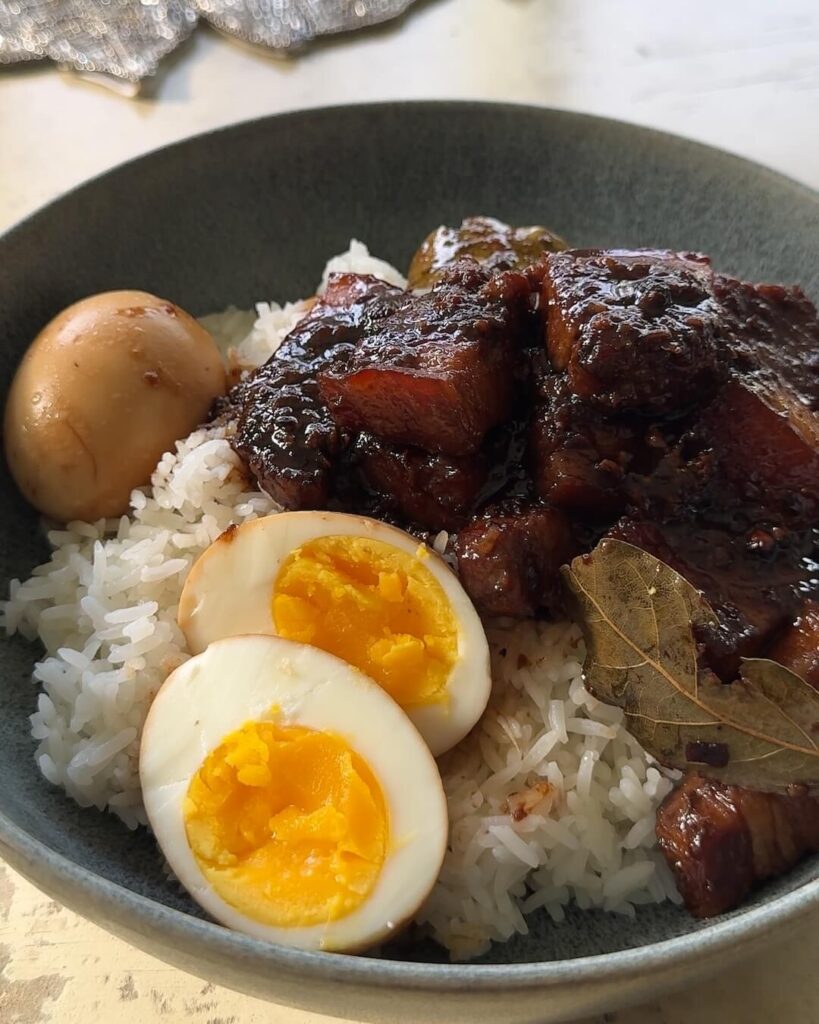
What does it taste like?
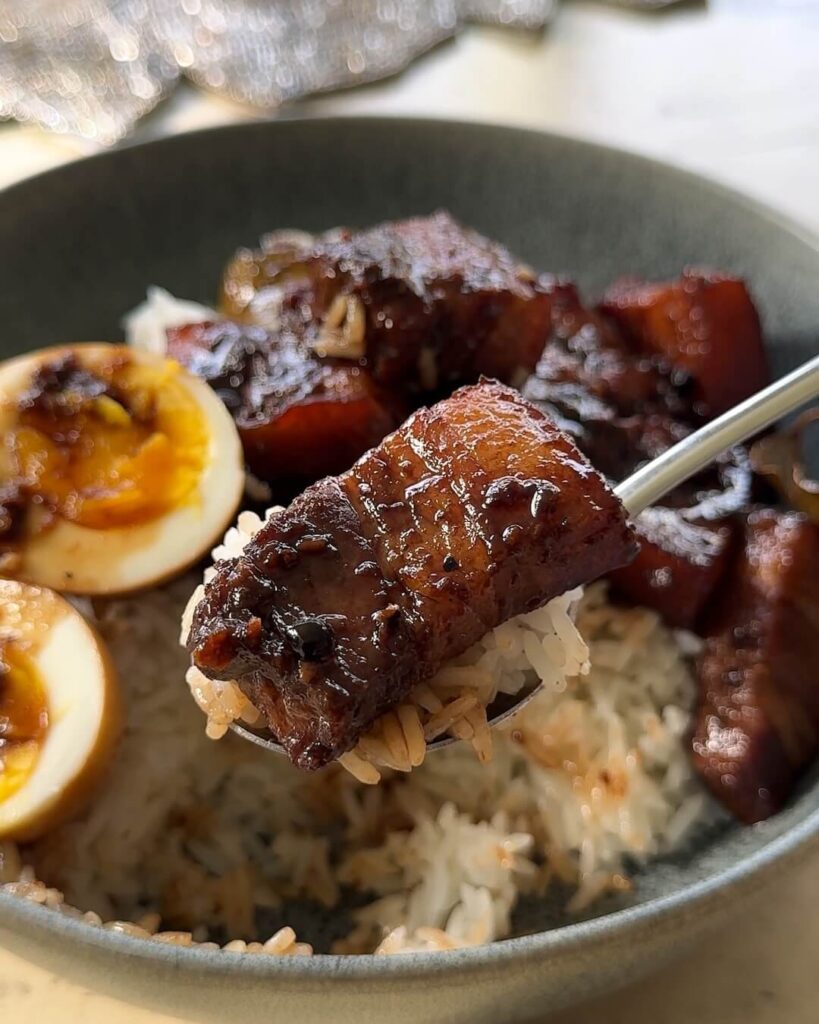
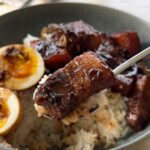
Filipino pork belly adobo is the ultimate balance of savory, tangy and subtly sweet. The pork belly is braised until the fat is melt-in-your-mouth tender and the skin turns silky and gelatinous. It’s infused with a whole head of garlic, pops of black pepper and cane vinegar that adds a bright tang to cut the richness of the pork.
Tips for cooking pork belly adobo
Sauté the soy sauce: Instead of pouring all of the liquids in at once, add the soy sauce directly on top of the sizzling pork to caramelize and build a deeper flavor.
Do not stir the vinegar: Once you pour in the cane vinegar, leave the pot completely undisturbed for 3 minutes. Letting it boil off untouched cooks off the harsh vinegar taste, leaving you with a more well-rounded tasting dish.
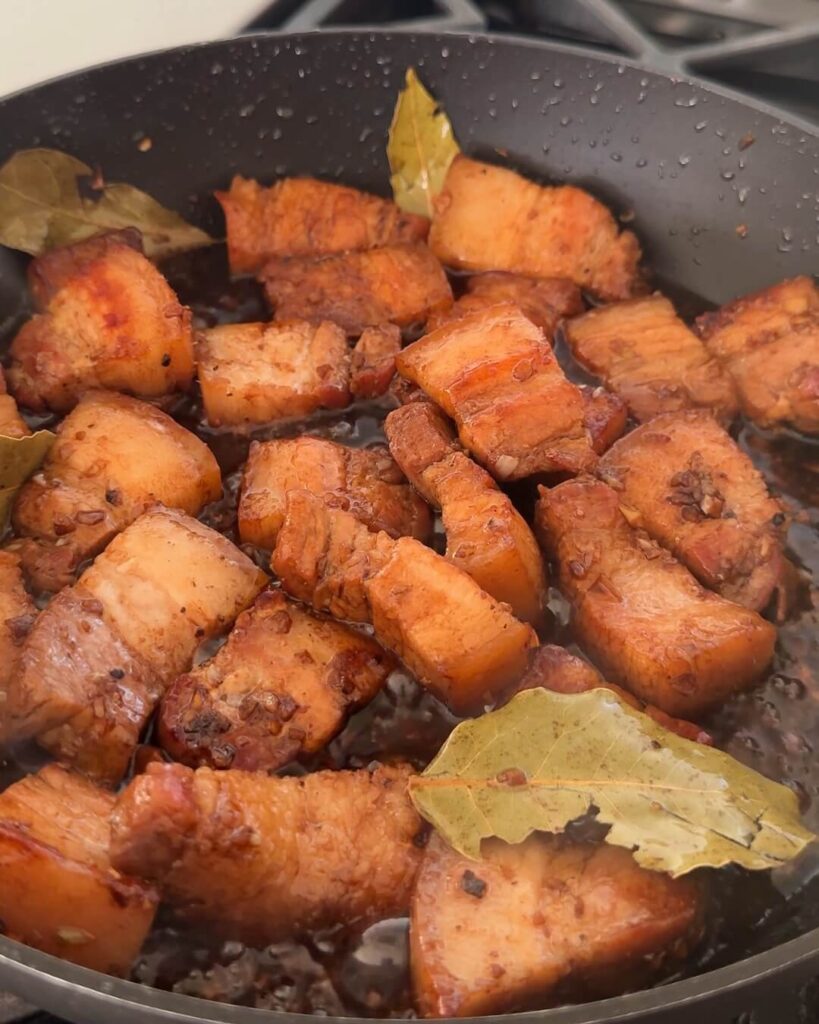
Caramelize first, then glaze: Remove the sauce and set aside, then increase the heat to caramelize the pork belly so you get those delicious, crispy edges. Pour the sauce back in and reduce until thick and glossy.
How to serve
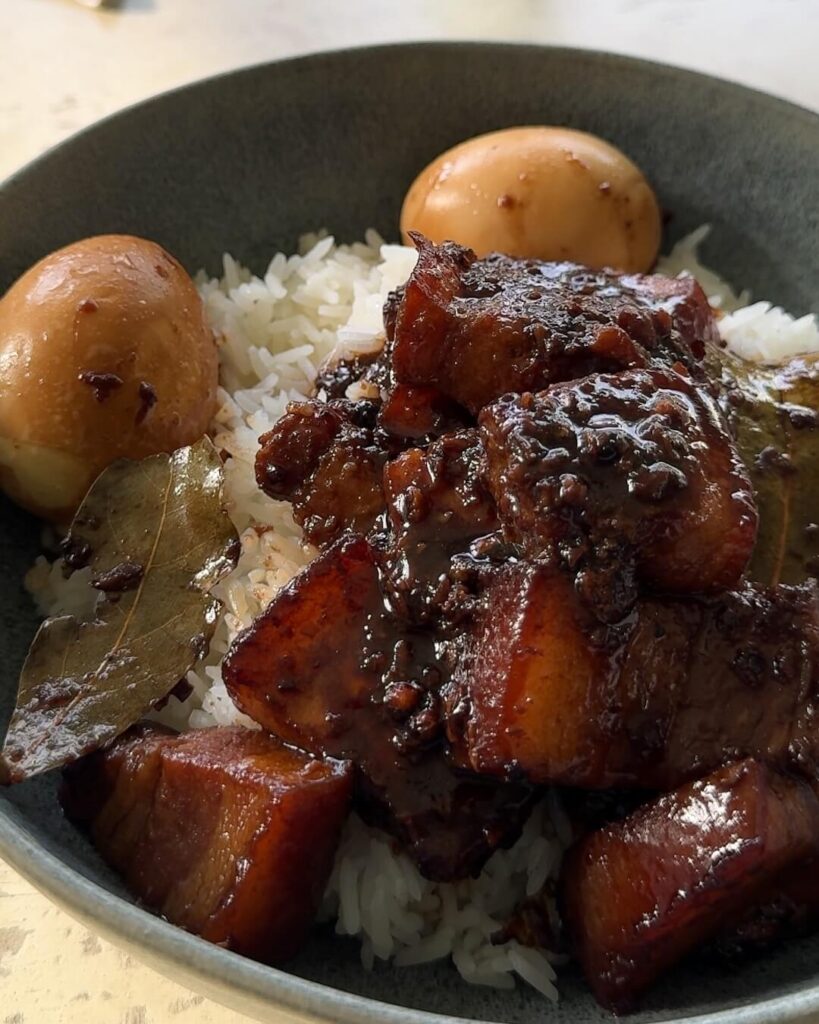
This pork belly adobo has bold, rich flavors so it pairs best with plain steamed jasmine rice. Slice the braised eggs in half and spoon extra sauce over the rice to enjoy.
Storing & reheating leftovers
Pork belly adobo tastes even better the next day! Store in an airtight container in the refrigerator for up to 4 days. Skim off any leftover solidified fat once chilled (if this step wasn’t done during cooking). Reheat on low by simmering in a covered pot with a splash of water or broth to loosen the thick glaze, and uncover towards the end to reduce the sauce again.
Pork Adobo
- Total Time: 1 hour, 15 minutes
- Yield: 2 to 3 servings 1x
Description
Filipino pork belly adobo is the ultimate balance of savory, tangy and subtly sweet. The pork belly is braised until the fat is melt-in-your-mouth tender and the skin turns silky and gelatinous.
Ingredients
1 tsp neutral oil (skip if using non-stick pan)
1.5lb (680g) skin-on boneless pork belly, cut into thick pieces
kosher salt to taste
1 whole head of garlic, roughly chopped (about 12 cloves)
1 tsp whole black peppercorns (crush half and leave the rest whole)
5 dried bay leaves
1/3 cup Dati Puti soy sauce (this is a Filipino brand you can find here)
1 cup water
1/4 cup Dati Puti cane vinegar (this is a Filipino brand you can find here)
4 medium-boiled eggs (boiled for 8 minutes, or 6 minutes if you like it runny)
3 tbsp light brown sugar (adjust to taste)
steamed jasmine rice, for serving
Instructions
- Heat oil in a pot or deep skillet over medium-high heat (skip if using nonstick) and add the pork belly pieces. Salt to taste, then sear until fat renders and the pork belly is browned.
- Add the garlic and sauté until light golden brown, then add the bay leaves and peppercorns.
- Pour in the soy sauce and stir for 1-2 minutes until bubbling and reduced, then add water and scrape up the browned bits from the bottom of the pan.
- Bring to a boil, then reduce the heat to a gentle simmer and cover with a lid. Cook for 30 minutes, then leave the lid slightly ajar for the last 15 minutes to slightly reduce the liquid. *See note #1
- Use a spoon to carefully skim off the excess oil that pools on top. You can also do this after refrigerating once the fat has solidified.
- Pour in the cane vinegar and let it boil undisturbed for 3 minutes without stirring to cook off the harsh acidity. *See note #2
- Stir in the brown sugar until dissolved, then remove the sauce and set aside. Increase the heat to high to caramelize the pork until the edges are crispy, watching closely so the garlic and sugar don’t burn. Skip this step if you prefer a softer texture all around.
- Pour the sauce back in and add in the peeled boiled eggs. Cook until the sauce is thick and glossy, spooning the sauce over the eggs to coat. Pair with steamed jasmine rice and enjoy!
Notes
#1: Add more braising time for thicker cuts. The ideal texture is soft, but still holding shape – it will continue to cook later. I like to taste test it at 30 minutes and stop simmering when I’ve reached my desired texture. Don’t rush this process – low and slow will give you the best texture.
#2: I highly recommend Filipino cane vinegar for a more mellow acidity and natural sweetness – western vinegars taste much harsher, though rice vinegar, apple cider vinegar, or slightly less white vinegar will work as a substitute. You can find the brand I use here.
- Prep Time: 15 minutes
- Cook Time: 1 hour
- Cuisine: Filipino


No Comments